Picture
...and we like those people. We don't read their novels -- after all, we haven't heard of them or their creations, so why would we be interested in their writing? -- but that's one of the downsides of avoiding book promotion. If people don't know about your work, they're unlikely to buy it. (Well, duh.)

We’re terrible at promoting our work and that’s why our own sales figures are so dismal. (Yes, that IS what we tell ourselves on a regular basis.) We mention this today because we recently picked up a free Kindle book, courtesy of eReaderIQ, that promised to help us correct that problem. In this ebook bestseller, the author shares her secret behind tens of thousands of paid downloads.

What specifically does she do? She promotes her work endlessly. Specifically, she tweets. On the hour, every hour, and sometimes twice an hour. Every tweet includes a pitch to buy one of her books.

Her tweets go something like this: You know what's great? My book  GUN-JITSU: ENTER THE FIST! Also, powdered milk! It's so handy!

I bought my mother a copy of my book GUN-JITSU: ENTER THE FIST! She says it's the best thing since powdered milk!

My kitty is named GUN-JITSU: ENTER THE FIST! Just like my book! Uh-oh, I think I'm allergic to powdered milk!

Personally, we hate the hard sell but not everyone agrees with us. Twitter is so happy with the idea, they’ve developed an auto-tweet, allowing the Twitter-pated to queue up their messages and send them night and day. If you’d like to use the auto-tweet, you’ll need to find it yourself. We think it’s the devil’s work and we refuse to help.

We complained to a writing buddy but he told us that all of the shouting is worthwhile. He admits he’s been a little obnoxious, pushing his first novel on Facebook, and we’d agree. His self-promotion has resulted in a low two digit sale number (as in, less than 20 buys) but he counts it as a win. We count it as a reason to avoid his Facebook page.

It was right about then that we wandered over to Absolute White and found a voice of calm restraint. Specifically, we discovered Jane Wallace-Knight. In a forum devoted to book promotion, she wrote, "I have my first book coming out next week and as I'm British I hate bigging myself up and am full of self-deprecation."
 
We liked her immediately. We also liked the phrase "bigging myself up" and, since we're the best in the world at self-deprecation, we felt we could relate to her feelings. Also, on alternate Thursdays, Renee proclaims that she’s British, too. We immediately went over to Jane's blog site, only to discover that her posts were as modest and polite as she is. She's joined Twitter but we aren't following her. Without even meeting the woman, we suspect she hates being in the Twittersphere and her tweets will reflect those emotions.

Jane will blog, because she must, and she'll tweet, because she should, but she'd much rather be writing. We've been in her shoes so we know she feels obligated to do some kind of promotion. Since her novel -- The Holy Trinity (The Wolves of Gardwich) -- is about to be released into the world, we thought we'd lend a promotional hand. A sister-to-sister (and one brother) kind of thing.

We thought it best to approach things gently so we knocked softly on her electronic door but only asked three questions:

How did a nice lady like you decide to start writing m/m erotica?

Jane: I started reading fanfiction when I was about nineteen and I found that there was so much more m/m fiction than there was m/f. I also found the quality of writing to be better and less self-indulgent. At first I would skip over the sex scenes, just wanting to immerse myself in the written world, but eventually the love stories written there would pull me in. I decided to start writing some myself and by then m/m just seemed to come more naturally to me, which is perhaps a little strange in hindsight as I am a straight female.

Does your mother know?

Jane: No. She knows that I write and that I have a book series coming out, but she doesn't know what it's about, much to her frustration. The sex scenes in the book are pretty explicit and the thought of my mother ever getting hold of it and reading it is enough to give me nightmares.

What's the storyline to your story and, since we're on the subject, why is it the best novel ever written by anyone anywhere ever? If you deny it's the best novel ever written, we'll just know you're being modest.

Jane: It is by no means the best novel ever written. I didn't set out to write a life-changing book that tops best seller lists. My book is a love story that will only appeal to a select group of people. However, if you are the sort of person who likes the idea of a werewolf, a vampire, and an angel falling in love then you might want to give it a read.
 
Jane's novel comes out in June from Siren Publishing. Tell 'em "Renée Harrell sent me" and they'll look at you oddly.

Reading: Bill Fitzhugh's Pest Control. Such fun.
 
Quote of the day: “The less you have to sell, the harder you sell it” – Tim Minchin, Matilda the Musical
 
 
Picture
...and, then, on the same weekend, our small town decides it's time for a little fun. To that end, they arrange for the Highlands Games out by the lake and a combo art show/wine tasting in the downtown district. Decisions, decisions.
 
In case you haven't gone to a Highlands Games event, the festivities exist to celebrate all things Celtic. There are bagpipers and dancers, herding dog exhibitions and athletic events (people toss heavy things as far as they can be thrown). There are booths selling food, drink, and t-shirts. This time, there was even a whiskey tasting.
 
We decided to skip the Highlands Games for three reasons. One, both of us would prefer to be there as participants instead of observers (but we don't get to play. Damn our lack of Celtic heritage); it just seems like it would be a lot more fun. Secondly, neither of us really, truly enjoys whiskey. Even the good stuff.
 
And, far from last, we would have had to buy tickets. It cost $16 a person to walk through the gate. For $16 a person, we reasoned, we could buy a pretty decent bottle of wine.
 
So we went to the town's other celebration of life. We did this because, one, we like art; two, we like wine; three, and far from last, the show was free for anyone who came downtown. In case you haven't gone to an art show/wine tasting, the festivities exist to celebrate good art and delicious wine. There are no bagpipers or dancers, no herding dogs and the only athletic event is pretending to be sober when you've spent too long sipping at the tiny little cups that contain the grape squeezings.
 
When we arrived, we found booths lining the streets and vendors selling food, drink, art and wine. We also discovered there were people selling jewelry and pottery, cowboy hats and bumper stickers. Wind chimes were available, meat seasonings merited their own booth, and there was a pasta company selling...well, pasta. We walked past every booth and all of the random musicians strumming on their random instruments. When we were done, we found very little actual art available for sale and most of those pieces were pleasant and a little, uh, boring. Why?
 
"People who come to a street fair could care less about artistic merit," one vendor/artist told us. He said this without bitterness but, then, his flower-filled booth was directly next to the kettle corn vendor. He was eating kettle corn as he talked. "They're looking for something sweet to eat and something fun to drink. If it's cheap enough, maybe they'll get some watercolor lilies. People want 'pretty'. They want 'pleasant'. These days, they don't want to be challenged."
 
Well, now we know. Freshly enlightened (and intrigued by the homemade fudge at the corner booth), Renee has decided to put away her latest canvas (the layout currently features an early-1960s Ken doll and emphasizes castration). Let this be a warning to you, too. If your artistic project is dark, gritty or unnerving, set it aside. Let the Chicken Soup for the Soul series be your guide. Somebody somewhere has sold over 100 million copies of those things.
 
Meanwhile, our most popular Kindle title (sadly, dark and gritty) has barely crossed into the four digits.
 
Currently drinking: Pillsbury Wine Company's WildChild Red. If you can find it, you should try it.
 
Currently enjoying: Better Off Ted. Why didn't we know about this show when it was on the air? (We're watching on Netflix.)
 
Quote of the day (just because): "Sometimes courage is the quiet voice at the end of the day saying, 'I will try again tomorrow.'" -- Mary Anne Radmacher
 
Kettle corn recipe: Thanks to the good folks at AllRecipes.com -- here


Picture
...and we've got the saddle sores to prove it. We mean this literally. Once again, a life experience has made us a little wiser in the ways of the world and just a tad bit disillusioned.
 
While you slept in this weekend, we got up early, drove for many miles, and joined over a dozen other greenhorns on a trail ride. Half of the team was eager to ride a horse again -- "You know, in case we ever write a Western" -- and the other half was too distracted by the televised NFL draft to realize that this was a bad idea.
 
Why was it a bad idea? Neither one of us had been on a horse since we were children. You know, back in the days when our bones tended to bend instead of break. But TravelZoo was offering a half-price coupon so how we could lose? We made our reservations, showed up on time...and discovered that the world had changed since either of us had climbed aboard a pony.
 
In the days of our youth, if someone had a horse, they'd throw a blanket on its back, toss an eager if unsuspecting child on the blanket, and see if the kid survived. For both of us, this had been a plan that worked. No longer. Apparently, there were no lawyers in the olden days because the 21st century ranch requires a few more rules and regs before they'll let you on their well-worn nags. Everyone is encouraged to wear a bicycle helmet (no one over the age of eight wore the bicycle helmet); no one is allowed to wear a hat that doesn't have a chin strap (several people wore hats without chin straps); and everyone is required to sign and initial three pages of legalese that indemnifies the ranch in case anything happens, up to and including the Apocalypse.
 
There were three categories of riders: Beginner, Intermediate and Expert. A "beginner" was anyone who'd ridden 50 times or less. With this stipulation, our particular collection of riders were all beginners. (One cowboy confessed they almost always have all beginners.) Then it was time to giddy-up.
 
If our experience is typical...and we both suspect it is...then our forthcoming Western will not be an exciting novel. It will go something like this: Twenty minutes into the trail ride, Tex Branigan began to pray something would happen to break the monotony. Even this early in the morning, he thought, it’s so damned hot. I should have worn my hat, chin strap or no. Oh, God, we’ve still got over an hour to go. Unless…could my watch be broken? Oh, please, let my watch be broken.

Just ahead of him, the beautiful Annie D’Orville straddled her steed with an easy confidence. She thought to herself, why does the horse in front of me keep pooping? I don’t care what anyone says, it really stinks. Oh, there it goes again. That’s like twenty pounds of product, green and chunky and awful. I should ask Tex how long we've been out here. The ride should be over soon. Right? Right?
 
On the plus side, it was a safe ride. There was a brief 30-second interval when the lead cowboy mistakenly had his horse move faster than a slow and terrible walk. The moment this happened, his supervising cowboy called out for him to slow down. "It's all fun and games," he cried, "until we have to fill out an incident report." 

*sigh*
 
When we got back into town, we ran into an old cowhand. We mentioned that, as brief as our experience had been, we'd actually come up with a saddle sore or two. "Next time, wear pantyhose," he told us. "All the cowboys do. Cut 'em off above the knee, they really cut down on the friction."
 
Cowboys, incident reports and pantyhose. We're telling you, the fantasy is gone.


Picture
…but it has come up in the conversation lately. As Louis Armstrong said, you say tomato, we say tomahto; you say we’re lazy, we say we’re pacing ourselves.  

This comes to mind today because a friend of ours has decided to train for an ultramarathon. Actually, when he first brought this up, he called it an “ultra”. We didn’t know what he meant. Ultra soft? Ultra delicious? Finally, we were forced to turn to one of our top level internet resources (Wikipedia) and discovered this: “An ultramarathon (also called ultra distance) is any sporting event involving running and walking longer than the traditional marathon length of 42.195 kilometres.”
 
42.195 kilometres = 26.2188 miles. Double those numbers and you'll see how far our chum wants to race. Call it, ultra x 2.

We found this whole thing fascinating because our friend is on the high end of middle-aged and didn’t appear particularly suicidal until now. For the next six months, our buddy shared on Facebook and, thus, the world, he plans to sacrifice a good portion of his free time to preparing for the event. If his heart doesn’t explode, he then plans to go into the mountains, motor along on his own legs for 52 miles, and see if he survives.
 
What’s more, he’s looking for people to do this with him.

His request came to us in a roundabout way. When it did, we didn’t actually say, “Hahahahahahaha!” but each of us thought it. If our friend happens to directly ask us if we’re interested in training with him, we’ll tell him we’re much too busy writing. We’ll imply that we have to finish our latest novel(s) before we ascend over a mile above sea level and get eaten by bears.

Just between you and us, a writer's secret: Sometimes, when a wordsmith just wants to be left alone to eat chocolate pudding and watch Ripper Street, the writer will tell people she has to focus to get back to working on her latest novel.

So how is our writing coming along?, you might ask. Well, since it’s you, we’ll tell you true: We’re pacing ourselves. All the great ones do.

Except for Cassandra Parkin. Since C.P. was wonderfully supportive of us and The Atheist’s Daughter (when much of the world flinched whenever we said the title), we always think of her fondly. We also keep half an eye on her writing career. Which is how we learned that
she’s been quite prolific. In the last eighteen months or so, she’s written a collection of themed stories, New World Fairy Tales, won the Scott Prize, wrote three hilarious reader guides to the 50 Shades trilogy, and -- just recently -- mentioned that her newest novel, The Summer We All Ran Away, will be released shortly by Legend Press.

You'd think she'd have sent us a free copy but no, so, without reading it, we assume her story will be life-affirming and meaningful and touching and wonderful. Or possibly dark and depressing but still touching and wonderful. We mean this sincerely. Her New World collection is terrifically good, and her reader guides are really funny, so we know her newest novel will be amazing. We suspect the storyline won't involve werewolves or vampires, angels or shape-shifting garage mechanics, so it may struggle to find an audience… but the good guys win on occasion so we have our fingers crossed for her.

Won't we be surprised if we discover the new novel is all about shape-shifting werewolf angels who want nasty sex with garage mechanics?

Because of her prodigious output, we suspect that C.P. is becoming another Stephen King or Isaac Asimov, unable to get through the day without drumming out a quick 15,000 words on the word processor. If so, good luck to her and we'll continue to follow her career. Our average literary output? 500-1000 words on a good day. On a really good day, 1500 words. We haven’t had any really good days of late.

Now, if you’ll excuse us, we have to get back to working on our latest novel.


Picture
…and he’s an author, and a playwright, and a thinker of thinks. You don’t have to take our word for it. He uses those same words on his website.

Anyone who bills himself as a thinker of thinks has a sense of humor and, a few weeks ago, we started searching for someone who knew how to laugh.  Most importantly, we wanted someone (a) with a sense of humor; who was (b) sane; and (c) willing to review self-published writing.

There are very few people who meet these standards. Here’s why: If you’re sane, why in God’s name would you ever offer to review self-published writing?

There’s no upside to it. If a reviewer is honest and loves a piece, everyone will dismiss what they’ve written because, hey, the thing was self-published. How good can it be? If the reviewer is honest and hates a piece, he or she will get nothing but grief from the author and the author’s fans. (This won’t happen with us, though. In order to develop an aggressive fan base, you have to have fans.)

There was nothing on his website to suggest that P.C. had stripped a few gears so we asked if he’d review Frankenstein, P.I.  The tale has sold a few copies here and there, but no one has ever shared their opinion with the world at large. We love our story and think it’s funny but we also think Crank: High Voltage is hilarious so our taste is more than a little suspect.

We just wanted some input. Good, bad, or indifferent, we’d decided that even a bad review would be less depressing than no reviews. In hindsight, we’ve decided we could be wrong about that last sentiment, by the way. We could be very, very wrong.

After we emailed Paul, looking for a review, he wrote back to ask if Frankie was really, truly polished and in shape for a review. This is not something a reviewer typically asks an author unless that author is also his own publisher. Clearly, P.C. had already been exposed to the indie world and he’d learned to ask a few questions.

When the review went live a couple of days ago, all he said was, Here’s the review! with a link attached. He didn’t say if he loved the story or if he hated it so, naturally, we realized he despised our words and wanted us to die. Even before we read his thoughts, we knew we wanted to use our experience for a blog post so we asked him why, exactly, he was willing to review self-published writing.

This is what he told us: “I spent a few years reviewing theatrical productions while living in Chicago, and I really love it. I think reviewers can be such a fascinating, useful part of the process (as long as the reviewer is knowledgeable and fair). I’ll also admit that it’s a selfish thing: I’m currently writing a novel. Authors, readers, and anyone else who is picking up my review or your book would be a part of the community. When my novel comes out, I don’t want anyone to ask, ‘Well, why should I pick it up? What has the guy done for anyone?’ I want them to know that I’ve got the authority to write a novel because I read and love literature of all kinds. And finally…hey, free books!”

We get the “free books” thing but, on reflection, this really makes us look bad. Unlike Mr. Cosca, we don’t read and love literature of all kinds. (Ulysses by James Joyce? The Modern Library ranked it #1 on its list of the 100 best English-language novels of the 20th century. Renee threatened to stab herself in the eye if she had to finish reading it.) Plus, we haven’t done all that much for all that many people but, please note, we did put two quarters and a nickel in the March of Dimes jar last year.

Since our initial question was a bust, we tried to relate with Paul on a more personal level. Writer-to-writer, we asked him if he had any “forgotten treasures” hidden inside his word processor. You know, works that he’d written but that had been ignored by the world around him. Kind of like, y’know, Frankie.

He said, “The first full length play I wrote was an adaption of Christopher Marlowe’s Faust.” We had to stop him there. We’re trying to connect with the guy but, seriously, FAUST? He adapted a masterpiece, written during Shakespeare’s time, filled with subtext and riddled with blank verse? This was his hidden gem?

“I did a reading of it that was well-received,” Paul told us. “It had a lot of really great moments and some serious potential. But in the end, it will take a full rewrite to get it done.”

But, once he rewrites it, it’s going to be this hot action piece, The Faust and the Furious, where Police Officer Brian O’Conner has to make a deal with the Devil, as played by Vin Diesel –

“No.”

And that’s because his version is actually a lighthearted romantic comedy, 50 Faust Dates, where commitment-phobe Henry Roth meets the Devil, as played by Drew Barrymore –

“No.”

As it turns out, P.C. might like to laugh but he’s just a more serious writer than either member of our team. Always has been, probably always will be.

But can a thinker of thinks enjoy the nonsense that is Frankenstein, P.I.?  His review is here.


...and we're guessing you don't, either.
 
We were having a very good day yesterday until, suddenly, it wasn't good at all.
 
Our thoughts and hearts and sympathies go out to everyone who was affected by the terribleness in Boston.  Which is, really, all of us.
 
So, so sad.
 
 
Picture
...even if we're not.
 
Instead of prepping our post for today, we spent yesterday traveling. A beloved family member has recently passed away and, while we couldn't be at the memorial, we could be with Renée's Mom while the service was being held. Family clings to family in sad times and we were clinging.
 
It was a wonderful time to be together but it meant we had to travel a lot of miles in a very short time. The trip back wasn't easy. If there was a High Wind Advisory, we missed it but the winds were fierce. When the traffic in front of us started braking abruptly, we knew something was wrong.
 
A minute later, we were creeping past an overturned tractor trailer. From what we could see, it had blown over. There are some days when owning a small car is not a bad thing.
 
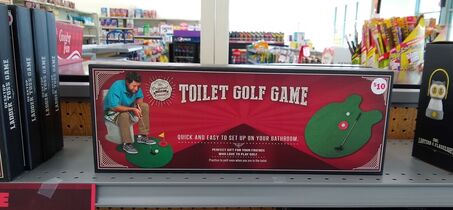
You'll notice we failed to get a picture of the big rig. Caught off-guard, we never thought to reach for a cell phone. No, we only remembered to use our cell's camera after we stopped at a gas station in the middle of the desert. In the center of abso-frickin'-nowhere. The image on the left is what resulted.
 
In the Men's Bathroom, Harrell found this sign taped over the urinal: OUT OF ORDER  DO NOT USE. In case this wasn't quite clear enough, the staff had helpfully added, That means no p*ssing in here
 
And -- here's the part that caused the photo to be snapped -- below that, just letting the management know he, personally, had received the message, one of their patrons wrote in, OK, before signing it... Steve. So, if anyone does ignore the warning, we can pretty well be assured it isn't Steve.

Somehow all of the above resulted in our finding an article in Business Insider called I Used the Worst Men's Bathroom in America. And we're sharing it with you.


Picture
...and sometimes the shark catches you. That's the secret subtext in Dean Koontz' How to Write Best Selling Fiction (his possibly outdated instruction manual, since it was published 30+ years ago and is currently out-of-print. That's okay, we're going to share the skinny with you before this post is over).
 
Although it could be that there isn't any secret subtext in the Koontz' book and we just wanted an excuse to post this photo.
 
Courtesy of Mr. Koontz and his , we learned that a writer has to plant his or her butt in the chair and actually write. This is the part of the process we struggle with; it's much more fun to plant our widening butts in the chair and eat cheesecake. Even though DK's success rings the register at 25 million dollars a year (or more), he still puts in the hours. Presumably a centimillionaire, he's at the word processor daily, making magic.
 
We have considerably fewer financial resources than him. However, we're willing to bet that we've eaten considerably more cheesecake than this wealthy, wealthy man. We also suspect, when he's in the twilight of his career and richer than Midas, he'll still be at the word processor, writing his next novel. As he shouts at Gerda to bring him his Malt-O-Meal, we'll be at the Cheesecake Factory, enjoying a slice of their GODIVA® Chocolate Cheesecake.
 
Truly, at that moment, who will be the richer?
 
You'd be mistaken to think the Best Selling Fiction book didn't offer more advice and in an entertaining fashion. From the start, we learned we needed to put care and craftsmanship into our work. We were advised to remain humble -- we're, like, the best writers ever at being humble -- and we were admonished to concentrate on our storytelling. Also, DK believes that all writers should be open to change.
 
So far, so good. Nothing startling but some solid advice. We soon discovered that writers need to “read, read, read” as well as “write, write, write”. We found out that exotic titles can excite the imagination and that a strong title is a good thing. We were not surprised to discover that the plot of a story is important and we were not shocked to learn that it's a good trick to catch a reader’s attention from the get-go.

Again, there was nothing wrong with any of this...but nothing that shouted "This is it! This is how you move up to Best Seller!", either. Since so much of what we read just seemed to be basic, common sense, we wondered if people maybe didn’t know this stuff back in 1981. Was there a school of thought that suggested that writers shouldn’t read or that most novels didn’t require a plot? Was there a famous writing instructor who insisted, adamantly, that no one cared about titles or that it was an amateur move to grab a reader’s interest?

We also wondered if we should have used this space to suggest that it was going to be easy to write a best selling novel. A bit impatiently, we started skimming through the book. There was more advice to follow.
 
Put action in your book? Yes! Too much action? No! Create believable characters? Check! (Also, the hero needs to be kind to animals and brush his/her teeth regularly. Not kidding.) The villain's motivation? It needs to make sense. The hero's motivation? It needs to make sense.
 
Do some research. Punctuate properly. Put a little style in your writing. Oh, and science fiction and mystery are “literary ghettos” but some writers can still make a buck if they enter the ghetto cautiously.

Toward the end of the thing, DK goes into contracts and advances and agents. Some of the info is understandably dated and some of it is simply depressing. For instance, the book advance he quotes for a new writer is still accurate today. Throughout the book, he samples freely from his own work, he provides his thoughts on other writers (he likes Stephen King but King failed to end THE STAND properly; he likes Ken Follett but Follett did lazy plotting on THE KEY TO REBECCA ), and, at the end of the day, we feel that his advice is certainly worth more than the money we spent on the book.
 
But we still hadn’t found the key that would turn our next project into a Big Money Success. Nor will we. In zipping through the incidentals, we missed this: “I cannot give you a magic formula that will guarantee you success as a novelist.”
 
Ah. Well, yes. Of course.  It all goes back to giving your book a good title, doesn't it? How to Write a Decent Novel That Might Someday Sell Well wouldn't exactly grab the crowd now, would it?
 
It would still be worth our twenty-five cents, though.


Picture
...'cause today is being devoted to a long road trip. Never you mind why we're traveling on this Tuesday (it's medical but not scary, meaning the hours will pass slowly, but the day will be broken up by new and various bookstores so it's not all bad), just know that we're putting rubber on the road. Which means that this post is going to be a teensy bit abbreviated because we didn't think to get it written earlier.
 
If you'll remember, we were about to share the secrets behind writing a best-selling novel. They weren't our secrets, though. These tips come from the giant brain known as Dean Koontz. And he should know how to write a best-selling novel since he's written so many of them.
 
Random interruption here: Did you know that Amazon has a list of their top 100-selling authors? Yes, you probably did, you probably go -- here -- all the time, but it was new to us. Going over the list, we see that DK is currently clocking in at #63, which seems a little low to us. James Patterson is #1 in the rankings (not in our house, no, but we've only read part of one of his books and we're not even sure he wrote it. It was credited to JAMES PATTERSON and Maxine Paetro and it was a big best-seller. The novel might have gotten better and better as it went along but we bailed at Chapter Five and never looked back). Stephen King is #23 -- we love us some King -- with J.D. Robb at #25, and considering how many J.D. Robb books we're seeing lately, we'd have thought she'd have cracked the Top Ten easily.
 
End of random interruption.
 
Before we were going to share Dean's secrets, we needed to know if the book was still in print. It isn't but, if you have a spare C-note, you'll find copies -- here -- and on Amazon. Even though we spent much less on our volume (25¢), at least your hardback will come with a only slightly torn dust jacket.
 
We wish ours had a dust jacket. We'd be eBaying the thing tomorrow.
 
Since it's jacket-less, and since our friends are generally fairly broke, we'll share a chunk of its wisdom with you. Even though it was written in 1981, it's still filled with some strong advice. To begin with, remember when we ranted that a writer could be fast or good but shouldn't count on being fast and good? As it turns out, that's just us. During his six years as a full-time novelist, Dean wrote quickly in an attempt to establish a sound financial base. He wrote bunches of everything, including porn. Sitting at the typewriter each and every day of the week, he was able to produce a series of Gothic romance novels. Each one took him about a week.
 
A week!
 
It took us three months to do a Young Adult work-for-hire manuscript that was, we'd guess, at least 10,000 words shorter. Young Dean was a stud. He wasn't the only one, though. With a little bit of investigation, we discovered that Edgar Rice Burroughs wrote 413,000 words of published fiction in 1913 alone. John D. MacDonald, one of Harrell's favorite authors, said he completed 800,000 words of "typed manuscript" in FOUR MONTHS.
 
He tapped out more words than many writers will produce in their entire lives. How did he do it? "I worked twelve and fourteen hours a day, seven days a week." (This from Maybe You Should Write a Book by Ralph Daigh, also out-of-print and currently available, used, for a penny. Worth it, too.)
 
The takeaway from today's "How to write a best-seller" workshop? Put butt in chair. Keep it there and work. Hit the keys until your fingers bleed.
 
We never said it would be easy. (Well, yes, last week we said it would be easy. You can't live in the past.)
 
Quote for the day: “I think it is important to have goals in life, as long as you understand that achieving those goals will not make you happy” – Joe Queenan


Picture
…but we’re thinking you should, too.  It’s going to be easy.

The idea came to us while Harrell was flipping through some old magazines. He came across a 30+ year old interview with a writer he enjoys. For some reason not yet clear to anyone, he decided he needed to read that interview. Even though, again, the magazine was 30+ years old.
 
Even though Harrell had promised to spend the afternoon working on the back yard watering system.

It is FINALLY less cold in Northern AZ.
 
In the ancient interview, the writer declared that he was ready to sit down and make some serious money. Name Withheld said, "Every asshole who reads under a hairdryer or while sitting with a can of beer in his hand is going to be buying and reading the book that I will be writing, the novel that I'm writing, and that will be top of the bestseller list. I promise you. Number one bestseller in the nation."
 
He felt he could write his bestseller in a couple of years. This sparked our attention. 

(If you happened to have read the interview, once upon a time, feel free to fill in the Name Withheld part. We’re not comfortable doing it here. If you haven't read the interview, just know that Name Withheld is a writer of some repute. He is unquestionably gifted and his stories are award-winning. That’s the good news. That bad news is, NW is reputed to be touchy as hell and happy to initiate a lawsuit at the drop of a hat. We’re hoping not to be sued this year. At least, not until after we’ve written our best-seller and can afford a really good attorney.)

NW clearly thought it wasn’t much of a challenge for someone to climb the bestseller’s list. And NW should know. He’s still in the writing game, he's been there for a long, long time and he knows the ins and outs of the publishing biz. As far as we know, he never actually got around to creating his #1 smash hit novel but we’re sure there’s a good reason why he didn't.

Maybe he was spending too much time in court.

Respecting NW’s expertise, we wondered if someone could decide to just sit down and write a #1 bestselling novel. After all, when it comes to writing popular fiction, how hard can it be? Novice author E. L. James came out of the gate with three huge #1 hits. Financially, it worked out very nicely for her. At one point, she was reported to be making over a million dollars a week from her work. 

For had that kind of coin, we decided we should write one, too.

Now, our beautiful daughter had already provided us with the template for writing success – Rachel’s Rules and Regs of Writing a Successful Romance – but we’ve tried that. Yes, we did. While you assumed we were lying around the house, one of us recuperating from surgery and the other one failing to fix the backyard water system, we were also writing.

So far, our new book’s sales have failed to soar into the six and seven digits. Or the five digits. Which makes sense, considering that it came out a heart beat ago, but the audience's immediate response leaves us wondering if we’ve truly written America’s Next Literary Obsession. We doubt it and, consequently, we’re doubting Rachel’s Rules. You may be asking, Did we follow the instructions exactly as given? Good question. We didn’t follow every single little tiny syllable, no, but basically we followed them. Yeah.

Since our newest work doesn't appear destined for the New York Times Bestseller list, we've decided we’ll look for inspiration elsewhere. Three days ago, we found our inspiration at a used book sale. We located our very own hardcover guide to fame and fortune and it only cost us twenty-five cents.  

Half of Team Turner believed we should put the book aside while fixing the water system while the other one knew we needed to focus on the 304 pages of brilliant advice in front of us. If you’d like to know which one of us won the argument, here’s a hint: the shrubs in back are turning brown.

Wander this way next week and we’ll reveal all. Or, at least, a little more.